
When we think about improving our workspace, it’s easy to assume that we need expensive furniture, fancy chairs, or high-tech gadgets. But what surprised me most is how much of a difference just one small change made for me. It didn’t cost me anything, but it completely transformed how I feel when I sit down to work.
At first, I didn’t even plan to make a change. I had simply been feeling unmotivated for days and couldn’t figure out why. But when I sat at my desk one morning and noticed how dull and crowded the space looked, something clicked. It wasn’t the work itself that was draining me—it was the space around me. That realization made me curious about what one small improvement could do to lift my mood and focus again.
Why Our Workspace Matters More Than We Think:
Our surroundings have a silent influence on how our minds function. When your space feels heavy or visually busy, your brain processes that clutter as extra “noise.” It’s no surprise that on messy-desk days, even simple tasks can feel harder. But the opposite is also true—when your space feels calm, it creates a kind of mental clarity that helps you move through your work with less effort. The best part is, this doesn’t require any fancy setup; it just starts with awareness.
Your workspace isn’t just a physical spot where you sit; it’s the environment that shapes your focus, energy, and mood. If your desk feels cluttered or uncomfortable, it silently adds stress and reduces your ability to concentrate. On the other hand, when it feels organized and welcoming, even difficult tasks seem lighter.
The problem is, many of us put off making changes because we believe it requires money or big upgrades. But sometimes, it’s really about noticing one small thing that keeps distracting you — and fixing it.
That small thing might be different for everyone. For some, it’s the uncomfortable chair that makes you shift around every few minutes. For others, it’s the messy stack of papers that constantly catches your eye. Once you identify that tiny annoyance and deal with it, your workspace starts to feel lighter instantly. It’s amazing how something that seemed so minor before can completely shift your attitude toward work.
The Power of a Small Adjustment:
When we talk about improving our space, we often imagine big, impressive transformations—the kind you see in home-office makeovers online. But the truth is, the most meaningful changes are usually invisible to others. It could be something as simple as turning your chair toward natural light, clearing one corner of your desk, or choosing a different background for your calls. These subtle tweaks change how your environment “feels,” and that’s what makes them powerful.
In my case, I discovered that a tiny shift made the biggest difference. I didn’t renovate the room or buy anything new. Instead, I focused on improving one element of my workspace that always bothered me. It was surprising how quickly my desk started to feel like a space I wanted to spend time in, instead of one I avoided.
The change was so simple, yet it created an instant sense of comfort and calm. It taught me that our minds pick up on small details much more than we realize.
Reconnecting with Your Space:
Sometimes, we get so used to our surroundings that we stop really “seeing” them. Taking a moment to pause and notice your space—what feels right, what feels off—can reset that connection. Once I began treating my desk like a living part of my routine rather than just a tool, I started taking better care of it. That small sense of ownership made me feel more grounded every time I sat down to work.
How a Better Workspace Impacts Productivity:
The effect of a comfortable workspace is not just about appearance — it directly impacts performance. After making my small change, I noticed:
- I could sit for longer periods without feeling restless.
- I no longer felt the urge to constantly get up or take breaks.
- My focus improved because my environment wasn’t distracting me.
- I ended my workdays feeling less drained.
- When you enjoy the space you’re in, working stops feeling like a punishment and starts feeling more natural.
It wasn’t just physical comfort—it was emotional relief. I realized how much energy I used to waste fighting small irritations without even knowing it. Once those were gone, I could start and end my day with a calmer mind. That made it easier to stay consistent with my work instead of constantly chasing motivation.
You Don’t Need Big Purchases to Feel a Big Difference:
This experience also reminded me that comfort doesn’t come from expensive upgrades. Of course, buying ergonomic chairs or modern desks can help, but many of us don’t actually need those things. What we need is a space that feels clean, functional, and personal to us.
Your workspace should tell a quiet story about who you are. Maybe it’s a photo that inspires you, a small plant that adds life, or even a notebook that reminds you to slow down.
These little personal touches give your desk a sense of identity. When your space reflects you, it becomes easier to show up and do your best work because it feels like your own corner of focus and calm.
A single small change — whether it’s about how your desk is arranged, where the light falls, or how you sit — can make your space feel completely new.
A 5-Minute Workspace Tune-Up (No New Purchases)
If you want the same “small change, big difference” effect, try this quick comfort check before you start work:
Chair height & posture: Adjust so your knees and hips are level and your forearms rest flat on the desk. If the chair’s low, sit on a folded towel or cushion.
Screen at eye level: Prop your laptop/monitor on a couple of books so the top of the screen is near eye height. This reduces neck strain and keeps you focused longer.
Light from the side, not behind: Turn your setup slightly so sunlight hits from the side. It softens glare on the screen and makes the space feel brighter without eye strain.
Simple back/foot support: Roll a small towel for lower-back support and use a sturdy box as a footrest if your feet dangle. Tiny adjustments = big comfort.
Quiet the noise: If your room is noisy, a low fan hum can mask distractions. Even closing one door or window can make the space feel calmer.
Temperature & hydration: Keep water within reach and nudge the room a degree warmer/cooler. Feeling physically comfortable helps you settle into work faster.
These tiny tweaks cost nothing, but together they make your desk feel intentional—comfortable enough to sit, and calm enough to stay. What’s interesting is how your body adapts once your workspace feels right. You begin to notice your breathing slows down, your shoulders relax, and your focus lasts longer.
Even the simple act of sitting down feels easier. That’s the subtle power of intention—you start feeling more in control of your environment instead of being controlled by it.
My Small Change That Made a Big Difference:
Whenever I sat down to work, my desk was always messy. If I suddenly needed something, it would take me a long time to find it. Sometimes, just looking at the clutter ruined my mood, and I didn’t even feel like working.
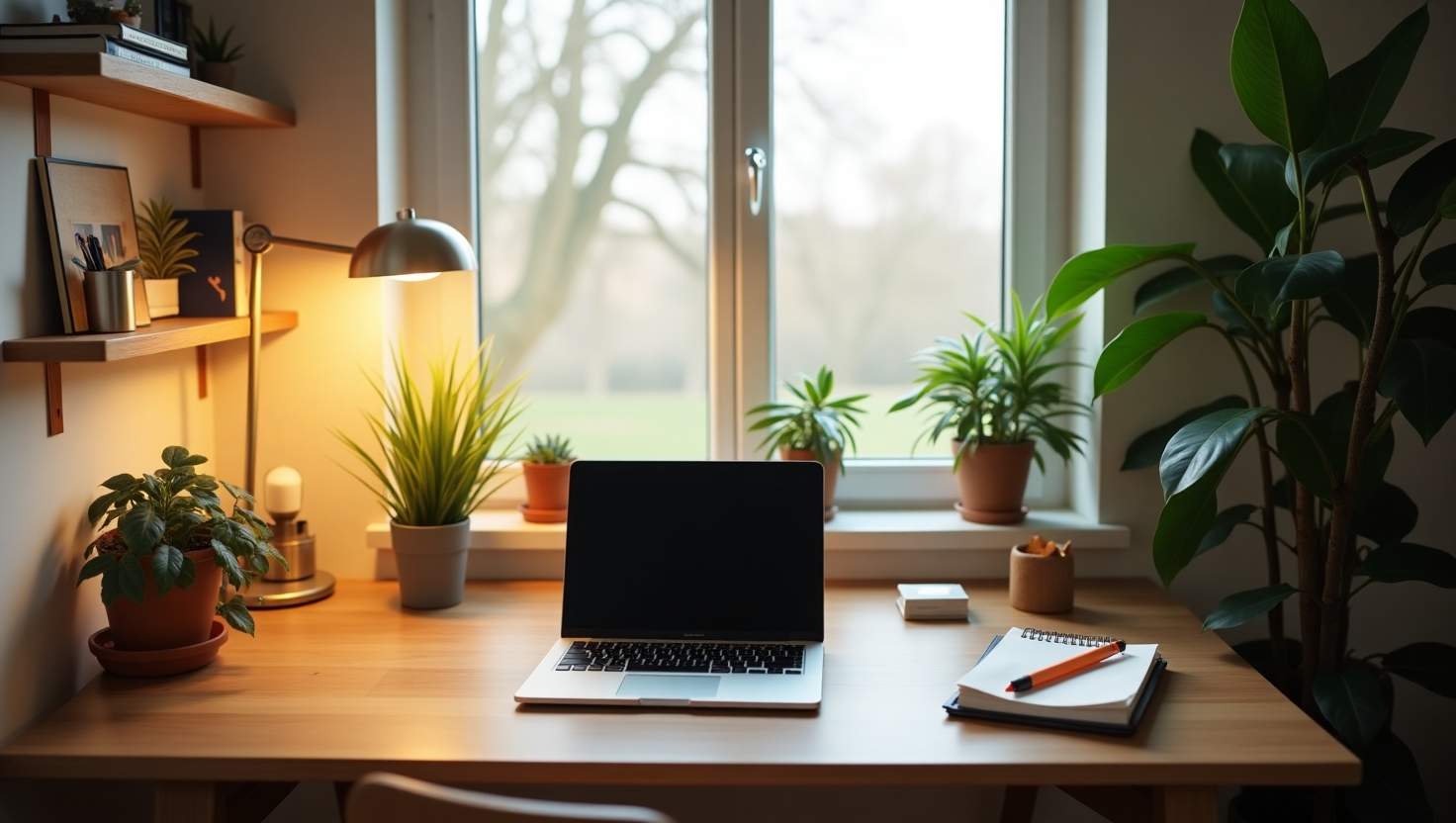
One day, I finally decided to fix it. I moved my desk near the window where sunlight comes in. Then I arranged everything properly—lamp in its place, pens and papers together, laptop on one side, and even a separate spot for my tea cup.
After organizing it, I started feeling much better and more peaceful. Now, whenever I get tired from work, I simply lean back in my chair, look outside the window, and enjoy the natural view. It gives me a small break without leaving my desk.
Sometimes, I even keep a small notebook nearby where I jot down random thoughts or quick ideas during those pauses. It helps clear my mind before diving back into work. Those few moments of reflection, paired with the sunlight and a cup of tea, make my workspace feel more like a sanctuary than a workstation.
That one small shift completely changed how I feel about my workspace—and I didn’t spend a single penny to make it happen.
If I’ve learned anything from this experience, it’s that transformation doesn’t always come with a price tag. Sometimes, it’s just about taking five quiet minutes to ask yourself how your space makes you feel—and then doing something about it.
Once you make that tiny adjustment, you’ll start noticing that your energy, creativity, and focus follow naturally.
Final Thoughts:
Sometimes we underestimate how powerful the smallest adjustments can be. Instead of waiting for the “perfect” setup or saving money for big changes, try looking around your workspace right now. Ask yourself: What is the one thing that makes this space uncomfortable? Then fix it.
That one shift might be all you need to feel better, focus longer, and enjoy the work you do every day.
FAQs:
1. How can I tell what’s wrong with my workspace?
Pay attention to what bothers you the most while working. Is it the lighting, the noise, the clutter, or your chair setup? The thing you notice first is usually the one small change that will make the biggest difference.
2. What if I work in a shared space or don’t have a home office?
You don’t need a separate room. Even a small corner of your living area can feel like a personal workspace if it’s organized and intentional. A tray, a small mat, or a specific chair can mark your “work zone.”
3. How often should I adjust or reorganize my workspace?
Every few weeks, do a quick 5-minute check. Your needs can change depending on the season or workload, so small tweaks help you stay comfortable and productive.
4. Do I need natural light for a good workspace?
Natural light helps, but it’s not essential. The goal is balanced lighting that feels easy on your eyes. If sunlight isn’t available, use a soft white lamp that mimics daylight.
5. What’s the first step to creating a better workspace?
Start with awareness. Look around your desk and find one thing that makes it harder to focus or feel calm. Fix that one thing first, and you’ll instantly notice the improvement.